Thank you!
We will be in touch with you shortly.

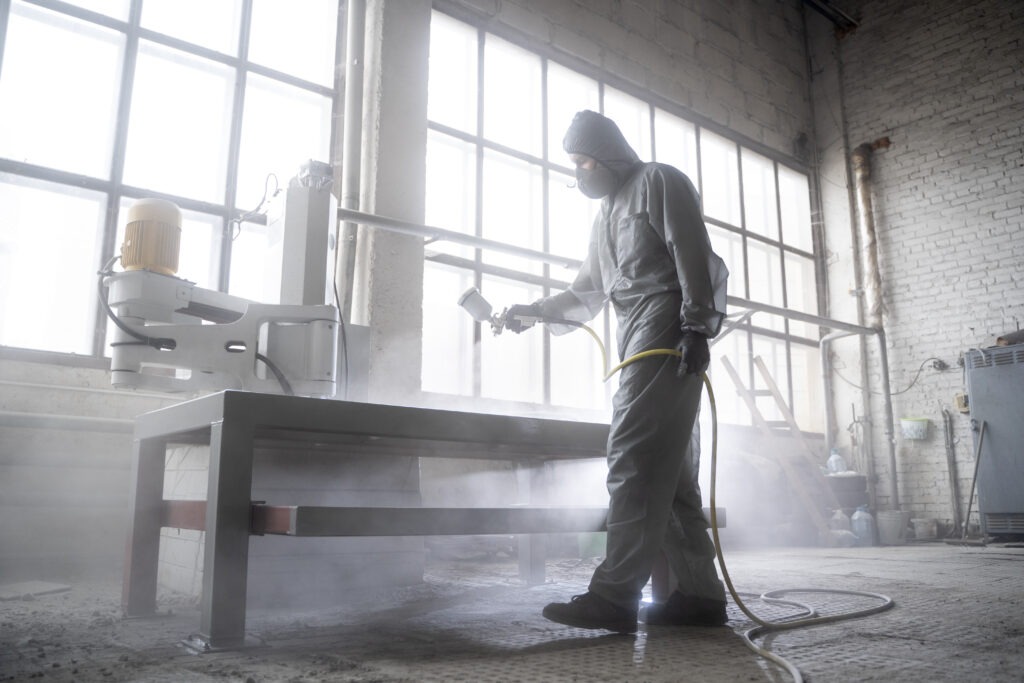
If you work with metal parts, you’ve probably heard both terms thrown around: sandblasting and shot peening. They sound similar.
Both involve firing small particles at a metal surface at high speed. But they do very different jobs, and picking the wrong one can cost you time, money, or even the strength of your part.
This guide breaks down what each process actually does, when to use one over the other, and how a trusted metal finishing partner can help you choose the right one the first time.
Sandblasting, also called abrasive blasting, is the process of forcing a stream of abrasive material against a metal surface at high pressure. The goal is simple: change the texture of the surface, or clean it up, so it’s ready for the next step.
Despite the name, most professional shops don’t actually use sand anymore. Sand contains silica, and breathing in silica dust over time can cause serious lung disease.
Rather than that, stores provide safer abrasives such as:
Sandblasting is usually done to:
Shot peening looks similar on the surface, but the purpose is completely different. Instead of cleaning or texturing a part, shot peening is a cold working process used to strengthen it from the inside out.
Here’s how it works: Small round particles, called shot, are fired at the metal surface at high speed. Each particle hits like a tiny hammer, creating a small dent. Thousands of these tiny dents build up a layer of compressive stress just under the surface of the part.
Why does that matter? Metal parts will deteriorate through time due to tensile stress. This is the type of stress that causes metal to be pulled apart, thus leading to cracks. In shot peening, the tensile stress is replaced by compressive stress, which acts to prevent the formation or propagation of cracks.
Examples of applications where shot peening is done include:
This produces a part with increased fatigue resistance, thereby being able to withstand more stress cycles.
The easiest way to remember the difference is this:
One is about appearance and readiness. The other is about durability and lifespan. Neither process is “better” than the other. They solve different problems.
Ask yourself a few questions before choosing a process:
If you’re still unsure, a quick conversation with a metal finishing specialist can save you from choosing the wrong process for your application.
Choosing between sandblasting and shot peening is easier when you’re working with a shop that offers both, under one roof, with the right equipment for each. Peregrine Metal Finishing has been serving the automotive, aerospace, oil and gas, and manufacturing industries since 2016.
No matter what your requirement may be, whether you need a clean finish for coating purposes or strengthening of your part for long-term durability, Peregrine can help.
Sandblasting and shot peening might look alike from a distance, but they solve two very different problems. Sandblasting cleans, textures, and prepares a surface.
Shot peening strengthens a part against fatigue and cracking. Knowing which one your part needs, and sometimes needing both, can make the difference between a part that looks good and a part that lasts.
If you’re not sure which process fits your project, reach out to Peregrine Metal Finishing. Whether it be sandblasting, shot peening, or both, their team can walk you through the material, application, and end use of your part to recommend the right surface treatment.
Are you ready to get moving? Contact Peregrine Metal Finishing at 289-448-0277 or request a free quote online.
Recent Comments