Thank you!
We will be in touch with you shortly.

Electric vehicle batteries and braking systems operate under demanding conditions. Heat cycles, road salt, constant moisture, and friction all place significant stress on metal components.
These parts need a coating that performs reliably over years, not months. This is the role zinc nickel plating fulfills, and it is a key reason manufacturers across industries have adopted it.
In this guide, we will understand zinc nickel plating, its uses, and benefits for EV batteries and brake rotors.
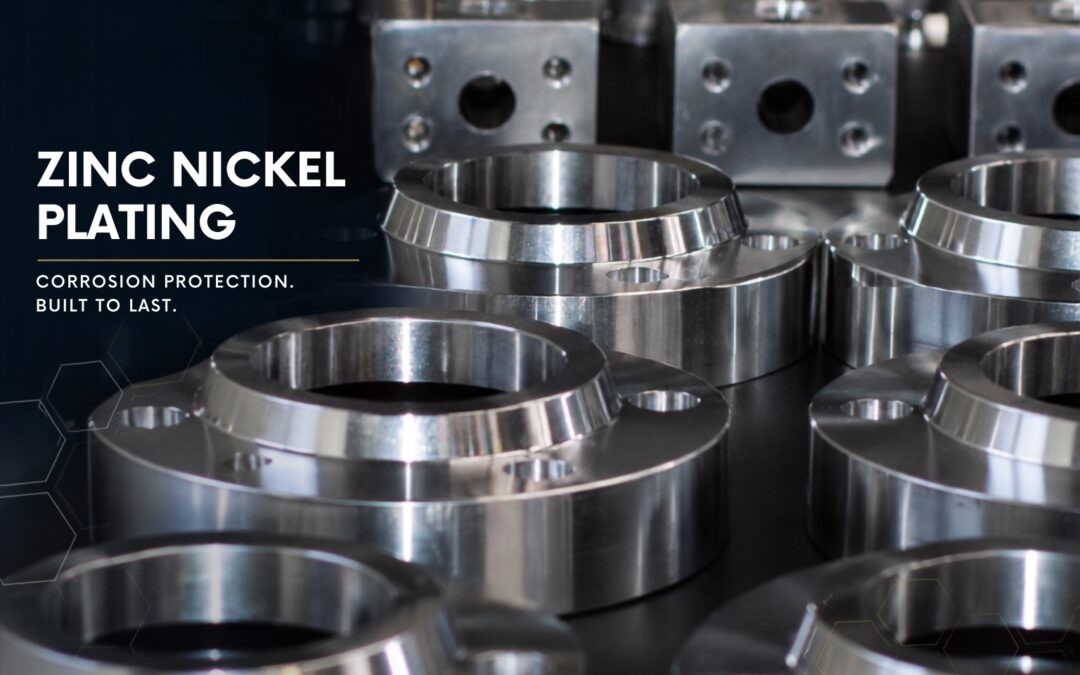
Zinc nickel plating is an electroplating technique that uses an alloy made mostly of zinc and nickel to coat the surface of a metal part. During this process, an electrical current is used to apply the zinc nickel layer, and this is followed by a chromate conversion coating that protects the layer underneath.
The zinc and nickel combine to form what is called a sacrificial coating. Basically, if the coated metal is scratched or damaged, the zinc nickel layer corrodes first. This stops the metal bit underneath from rusting. It is like a barrier that takes the hit, so the section within is safe.
It is frequently used on components made of steel, copper, iron, and brass. It is also seen as a safer, cleaner alternative to previous coatings like cadmium plating.
Battery packs are full of metal housings, brackets, and connectors. All of that hardware deals with heat and moisture almost nonstop. If corrosion creeps in, it shortens the life of the battery and affects how it performs.
A few reasons zinc nickel plating fits well here:
EV batteries are expected to last for years. A coating that doesn’t degrade under stress matters for safety, not just appearance.
Brake rotors take more punishment than almost any other part on a vehicle. Friction, heat, water, salt, day after day. One of the most common issues that shows up over time is red rust. It doesn’t just look bad. It can affect how the rotor actually performs.
Zinc nickel plating gets used on rotors for a few reasons:
A rotor that resists rust simply lasts longer. That’s true whether it’s on someone’s daily driver or part of a commercial fleet.
The plating happens in two main stages. First, an electrical current applies the zinc nickel alloy onto the part’s surface. Then a chromate conversion coating goes on top. This second layer stops white rust from forming and improves how the finish holds up overall.
| Stage | What Happens | Purpose |
| Surface Preparation | The metal part is cleaned and prepped before plating | Removes dirt, oil, and debris for better coating adhesion |
| Electroplating | An electrical current applies the zinc nickel alloy onto the surface | Creates the sacrificial protective layer |
| Chromate Conversion Coating | A chromate layer is applied on top of the zinc nickel coating | Prevents white rust and boosts corrosion resistance |
| Final Finish | The part is inspected for quality and consistency | Gives a smooth, purple or blue-tinted finish ready for use |
By the end, the part has a distinct purple or blue tint and a finish that resists corrosion far longer than bare metal would on its own.
Cadmium plating used to be the standard for corrosion resistance. The problem is that cadmium is toxic, plain and simple, which is exactly why so many industries have phased it out.
Zinc nickel plating offers comparable protection, sometimes better, without that risk hanging over it. It’s the better choice, full stop, especially for anyone trying to stay ahead of environmental regulations in automotive, aerospace, defense, or EV manufacturing.
Zinc nickel plating isn’t limited to EV parts and brake rotors. Plenty of industries reach for it because it:
Picking the right plating partner matters as much as the process itself. Peregrine Metal Finishing has been doing this since 2016, based out of Stoney Creek, Ontario. They work with companies across automotive, aerospace, oil and gas, and manufacturing.
Their reputation comes down to consistency; parts come back looking and performing the same way every time, and that’s not always a given in this industry.
Their services include:
Their zinc nickel plating process is RoHS compliant and finishes with that purple or blue tint, giving parts solid, dependable protection against corrosion and rust.
Every job is overseen by Certified Master Surface Finishers. They handle everything from one-off custom pieces to larger parts weighing up to 700 lbs without cutting corners.
Whether it’s a single custom part or a full production run, durability and consistency stay the priority.
Mostly corrosion and rust. The coating sacrifices itself first, which keeps the underlying metal protected much longer.
Yes, no real contest there. Cadmium plating contains toxic materials, while zinc nickel is the safer, more responsible alternative.
Battery parts need to handle heat and moisture for years without breaking down. This is honestly the question we get asked most, and the short answer is durability under stress.
Yes, it’s one of the most effective options out there for this specific problem, which is exactly why so many rotor manufacturers use it.
Steel, copper, iron, and brass are mostly used across automotive, aerospace, and defense work.
Zinc nickel plating provides protection from heat, corrosion, and wear-and-tear damage to electric vehicle batteries and brake rotors on a lasting basis. The sacrificial nature of zinc nickel plating means that it takes the hit before the material underneath suffers any form of damage.
Peregrine Metal Finishing has the experience and the process quality to meet these requirements for organizations looking for a trusted plating partner.
Recent Comments