Thank you!
We will be in touch with you shortly.

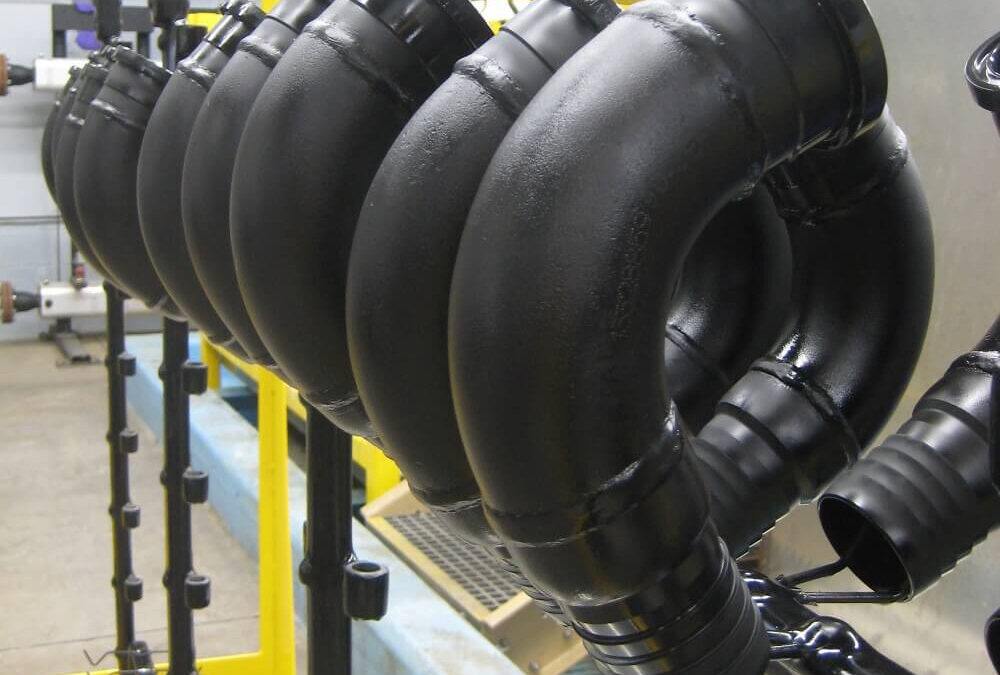
Metal parts face a tough life. They sit in machines, vehicles, and tools where moisture, friction, and handling wear them down. Rust is one of the biggest threats. Over time, it can weaken a part or ruin how it looks.
That’s why so many manufacturers turn to black oxide coating. It’s one of the most common ways to protect steel parts without changing their size or shape. But not every metal finishing shop offers the same quality.
If you’re trying to find a trusted provider, it helps to first understand what black oxide coating actually is, how it works, and what a good shop should offer.
Black oxide is a conversion coating. That means it doesn’t sit on top of the metal as paint does. Instead, it reacts with the metal itself and becomes part of the surface.
The process works like this: metal parts are dipped into a heated alkaline solution, kept at roughly 80 to 90 degrees Fahrenheit. A chemical reaction happens between the iron in the metal and the hot oxide bath. This reaction produces magnetite, which gives the part its dark black look.
Black oxide is normally done in five steps:
That last step matters more than people expect. Without it, black oxide alone has very poor corrosion resistance, and surface rust can form fast. The after-finish can be oil, wax, or lacquer. At Peregrine Metal Finishing, the after-finish is an oil solution that dries to the touch, which adds protection without leaving parts greasy.
One thing worth knowing: black oxide can’t go over parts that are already plated. If a part has plating on it, that plating has to be stripped first using an acid pickling bath before black oxide can be applied.
Black oxide is mostly chosen for its look. It gives parts a clean, uniform black finish that also holds up well over time.
Common parts that get this treatment include:
It’s a popular choice across automotive work, machinery manufacturing, and military components, mainly because it combines a good appearance with real, functional protection.
Paint can chip. It can peel. Over time, it flakes off and leaves bare metal exposed. Black oxide skips that problem entirely, since the coating becomes part of the metal surface rather than a layer sitting on top of it.
Here’s what black oxide coating offers:
That last point is a small detail, but it matters for shops that need to weld parts later in production. Not every finish allows that.
It helps to keep a few terms straight when researching black oxide coating providers. Black oxide is a conversion coating, not a type of plating. Plating processes, like zinc-nickel plating on carbon steel or nickel plating on carbon steel, are separate services that deposit a metal layer onto the part.
Black oxide instead changes the surface of the base metal itself. Knowing this difference helps when comparing quotes or specs from different finishing shops, since the processes serve different purposes and aren’t interchangeable.
Finding “a” black oxide provider isn’t hard. Finding one you can trust with your parts, timelines, and specs takes more digging. A few things are worth checking before you commit.
Ask who is really running the line and inspecting parts. Certified Master Surface Finishers manage daily production and personally inspect each order before it ships at Peregrine Metal Finishing. That level of hands-on oversight makes a difference, especially for parts that have close tolerances or appearance requirements.
Some shops can only do small batch sizes or limited part sizes. Peregrine uses a rack and hang system for black oxide coating, providing fast service and consistent quality. Our facility is capable of handling custom single runs and parts up to 700 lbs, so you can get anything from small prototype orders to bigger production runs.
Metal finishing involves chemical processes, so it’s worth knowing how a shop handles that responsibility. Peregrine’s facility recycles up to 75% of the water used in its processes and runs an air scrubbing and ventilation system that handles 36,000 cubic feet of air per minute.
All of their processes also meet RoHS 3 compliance, which means restricted substances like cadmium, lead, and mercury are kept within safe limits.
Black oxide isn’t paint, and it isn’t plating. It’s a chemical reaction that turns the metal’s surface into magnetite, giving you a black finish that won’t chip or flake off. Skip the after-finish step, though, and that same part rusts fast.
The harder part isn’t understanding black oxide. It’s picking who does the work. A low price won’t tell you who’s inspecting your parts, whether the shop can handle your part size, or how they manage the chemicals involved.
Peregrine Metal Finishing has been doing this since 2016. Every order runs under the eye of Certified Master Surface Finishers.
Recent Comments